Rideshare Reality: What to do if your Uber or Lyft crashes in San Antonio
- Leon Dacbert

- Apr 2
- 3 min read
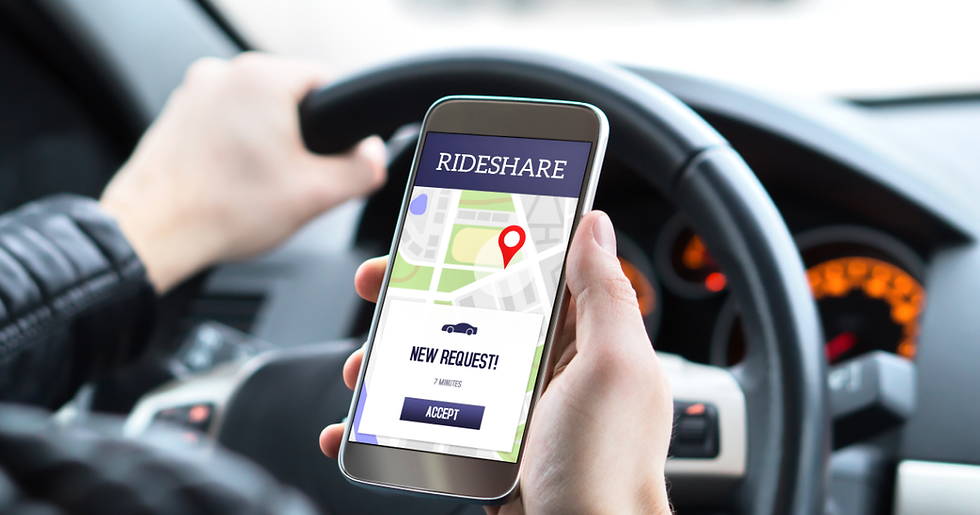
We’ve all been there. You’re heading out for a night or catching a ride to the airport, and instead of driving yourself, you pull up the app and call an Uber or Lyft. It’s convenient, it’s easy, and it usually goes off without a hitch.
But what happens when that ride ends in a crash?
Navigating a rideshare accident is a lot more complicated than a standard car wreck because there are several layers of insurance involved—and those layers change depending on exactly what was happening in the app at the moment of impact.
The Three "Periods" of Insurance
Insurance companies love to put things in boxes. When it comes to Uber and Lyft, they use three "periods" to decide who is responsible for the bill:
App Off: If the driver isn't logged in, it’s just a normal car accident. Their personal insurance applies.
App On, Waiting for a Ride: If they are "active" but haven't accepted a passenger yet, there is limited liability coverage (usually $30k/$60k).
Ride Accepted or Passenger in Car: This is the big one. Once you are in the car (or the driver is on their way to get you), a $1 million commercial policy typically kicks in.
The problem? These companies will often fight tooth and nail to move a crash from Period 3 down to Period 1 to save money. That is why having the right documentation is everything.
Step 1: Screenshots are Your Best Friend
If you are a passenger in a rideshare crash, the very first thing you should do (after making sure you're safe and calling 911) is screenshot your ride details. You need proof that you were on an active trip. This includes the driver’s name, the car’s make and model, and the map showing your route. Once a ride is "canceled" or "ended" after a crash, that information can sometimes be harder to find in the app. Lock it in immediately.
Step 2: Report it in the App (But Be Careful)
Both Uber and Lyft have a "report an accident" feature. You should use it because it creates a digital timestamp of the incident. However, be very careful about what you say. Just like with any other insurance adjuster, anything you type into that report can be used later to try and devalue your claim. Stick to the facts: "There was a crash at [Location] at [Time]."
Step 3: Get the Police Report
I’ve said it before and I’ll say it again: You need a police report. Don't let the rideshare driver talk you into just "exchanging info" and moving on. Because these cases involve high-dollar commercial policies, the insurance companies are going to investigate every single detail. A police report is the unbiased foundation of your case.
Why the "Why" Matters
Rideshare companies often try to avoid liability by claiming their drivers are "independent contractors" rather than employees. It’s a legal loophole they’ve used for years. Dealing with their high-powered claims adjusters—who deal with thousands of these crashes a day—can be incredibly overwhelming.
My goal is to handle that headache for you. I look at the GPS data, the app logs, and the driver’s history to make sure we are accessing the full coverage you are entitled to.
I Am Always a Call Away
If you were injured while riding in an Uber or Lyft—or if you were hit by one while driving your own car—don't try to untangle the insurance web on your own. Give me a call. We can go over your ride receipt, the police report, and your injuries right over the phone. I’ll make sure you have a clear path forward so you can focus on getting back on your feet.



Comments