
The Evidence That Disappears After a Truck Crash (and Why Days Matter)
By Leon Dacbert
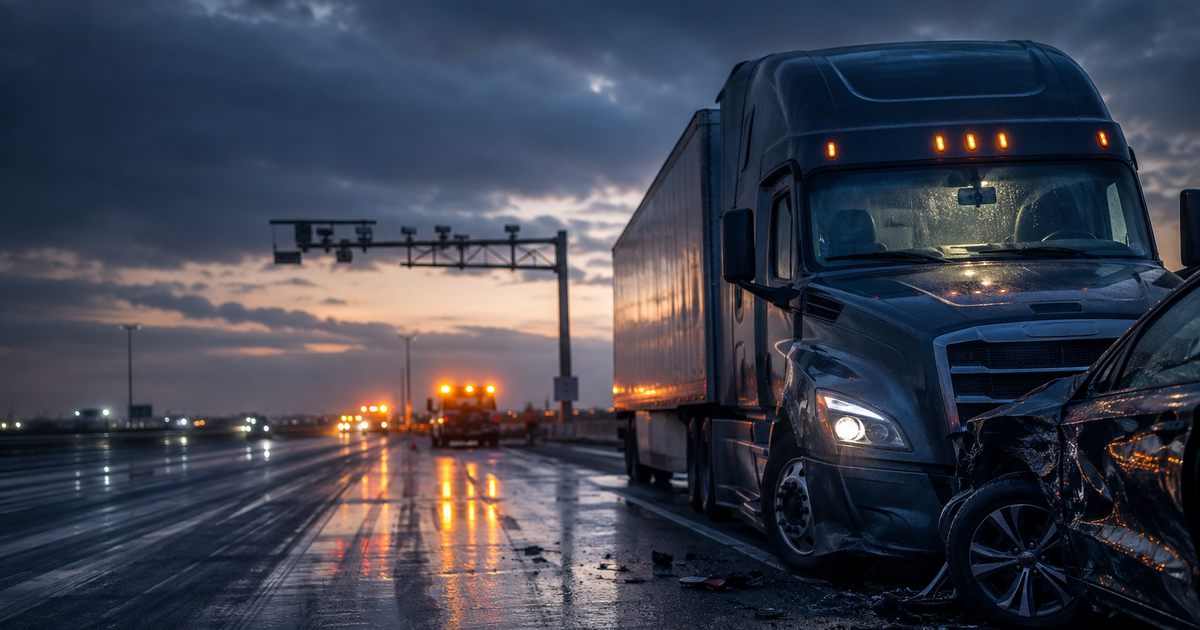
In my last post on 18-wheelers, I mentioned that trucking companies have teams that respond to a crash almost immediately. I want to come back to that, because it's the part that quietly costs people their case.
Here's the thing about a truck wreck. The best evidence isn't on the road. It's inside the truck. And a lot of it has a shelf life.
What's Actually in That Truck
A modern 18-wheeler rolls around with more data than people realize. After a serious crash, here's some of what I'm trying to get my hands on:
- The ECM -- the engine control module, basically the truck's "black box." It can show speed, braking, and throttle in the seconds before impact.
- The ELD -- the electronic logging device that tracks the driver's hours. It tells me whether they'd been driving too long.
- Dashcam and telematics -- a lot of fleets record video and GPS. If the footage helps them, it shows up fast. If it doesn't, it has a way of disappearing.
- Maintenance and inspection records -- the paper trail on whether the brakes and tires were actually kept up.
Some of this goes away on its own. Federal rules only make a trucking company keep the driver's duty logs and supporting records for six months -- the FMCSA sets that floor, not me. Dashcam footage can get recorded over in days.
Days, not years.
Why the Clock Starts the Day of the Crash
That's why I don't wait. One of the first things I do is send what's called a "spoliation letter" -- a formal notice telling the company to preserve the black box data, the logs, the video, all of it. Once they have that letter in hand, letting the evidence disappear becomes a serious problem for them.
And Texas takes that seriously. The Texas Supreme Court in Brookshire Brothers v. Aldridge spelled out when a company can be punished for destroying evidence. It isn't automatic. But when a company had a duty to preserve something and let it get destroyed anyway, the court has real tools to deal with it.
None of that helps if the letter goes out too late. That's the catch.
If you've been hit by an 18-wheeler on I-35, I-10, or anywhere in Texas, the worst thing you can do is wait and see how you feel. The evidence is already on the clock. Call me early, and let me go after it while it still exists.
Need Legal Help?
If you've been injured and have questions, I'm here to help. Contact me for a free consultation.